Running an Elementary School Science Fair (Printable Freebies!)
About a month ago, I learned just how true Murphy’s Law can be as we approached the date of our elementary school’s science fair. I ran the fair across three grades, with 130 participants and roughly 50 projects. With the date of the fair on Thursday, imagine the shock and horror that coursed through my body when I walked into my classroom Monday morning to find that all of the fourth grade projects had been thrown away. Yes, a THIRD of the near-complete projects were in the dumpster that was emptied over the weekend, as confirmed via CCTV. Not only did all of those projects disappear into a New York landfill, but an unopened box of brand new boards were also disposed of.
I learned a few things from this experience:
Label everything, and I mean everything, that you do not want to have thrown away.
Having the kids type their findings up was the best choice I ever made, as we could reprint their writing to reassemble boards.
Having coworkers who have your back is crucial. Without my team, it’s likely we would have had to cancel or postpone the fair. With their help, we were able to rebuild all of the projects that were lost.
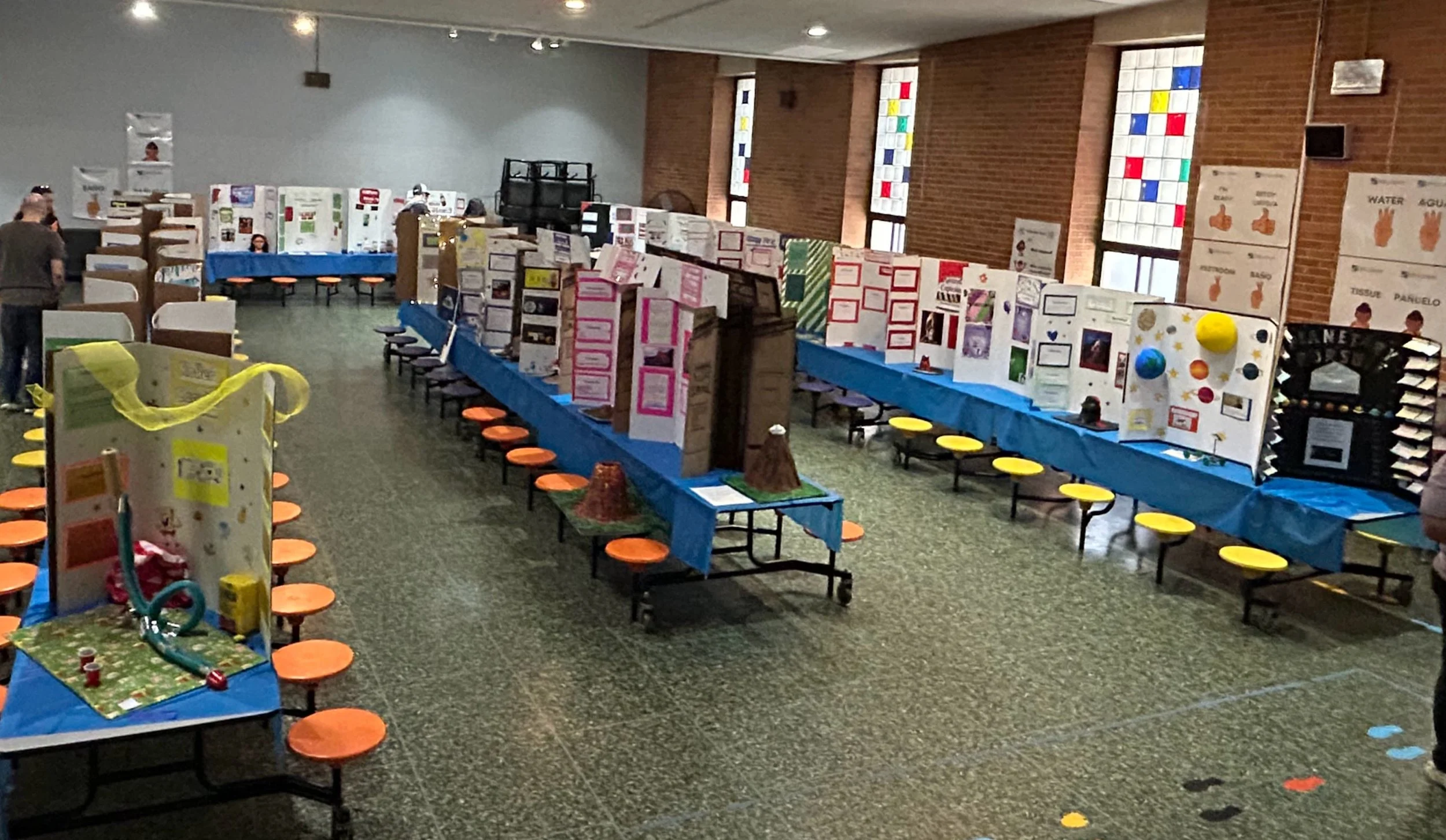
The projects on display in the school cafeteria.
A successful science fair with young students is possible! Will every project be filled with remarkable scientific insights? Certainly not, but I believe that the key role of an elementary fair is to get students excited, engage their fine motor skills, and to begin to explore the scientific method.
Next year, I am going to scale down the fair to focus on fourth grade so that all portions can be completed in class. This way, I will have the time to support the students each step of the way and push their scientific thinking. I have also used what I learned from this experience to develop a method of completing a science fair with young students in a way that is streamlined for both participants and educators.
If you want to run a science fair with your own students, I would plan to budget at least a month and a half of class time. If your schedule does not allow for class time and you instead need to use lunch periods, it is likely you will need to extend your budget to up to three months to complete this project.
I started students with a packet where they could brainstorm and track their progress. I used a pre-made list of science fair ideas to help spark ideas, but many of the kids came with their own ideas. To create the packet, I used the scientific method resource from Early Learning Ideas as a grounding vehicle anchor. With each meeting of the science fair participants, we tried to accomplish a few steps. Additionally, students were able to bring this packet home to continue working if you are assigning parts of the project as homework.
Then comes the heaviest lift, but one of the most iconic parts of the fair: the presentation boards! I have created three resources that you can print and have students write on, then cut out to glue to the trifold board. The questions on these guiding postables align to what students have been developing in their packet, making the transition to presentation creation seamless.
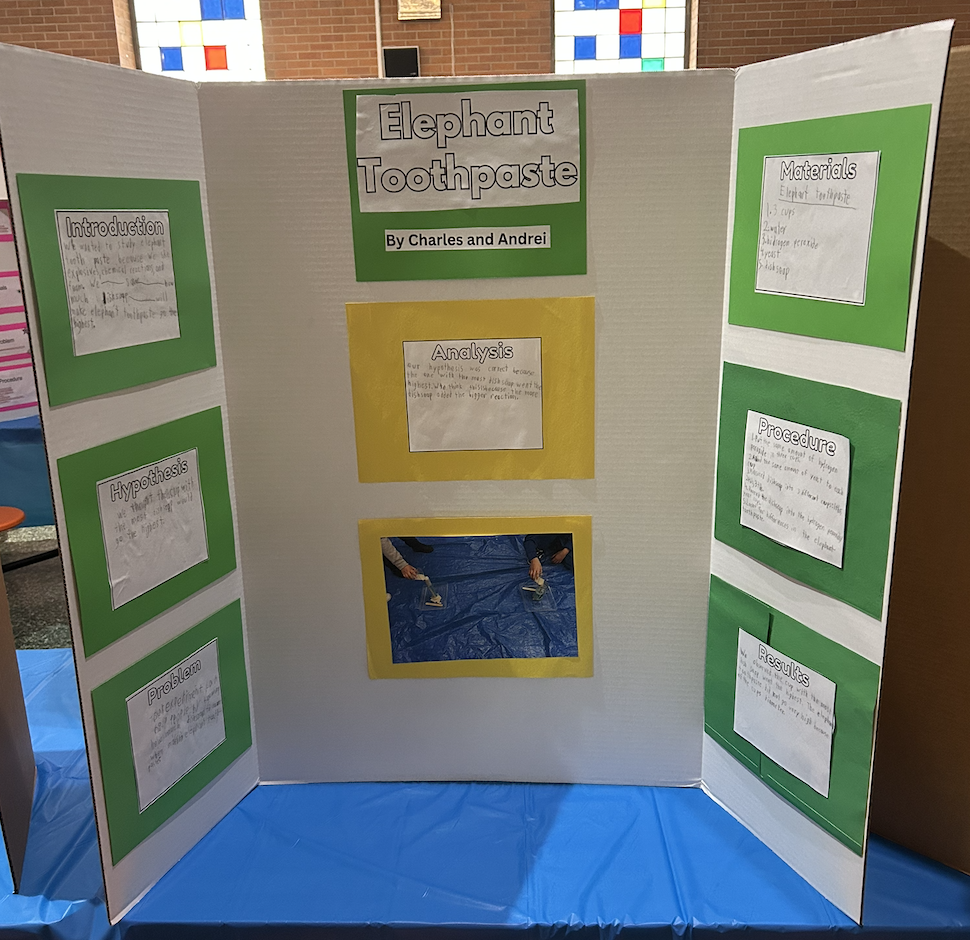
A science fair project completed using my printable resource.
I am going to include the links to these products below! They are free to download and an excellent jumping-off point for beginner science fair projects. I will continue to use these next year, as they are easy to upload and use with Google Slides to make digital versions of their work to print. If you find these helpful, let me know! Good luck to you all if you take on this wild endeavor - I promise it is so worth it.
A comprehensive, student-friendly guide to organizing and presenting science fair projects.
This printable resource walks students through each essential component of a science fair presentation with clear instructions, helpful prompts, and real-world examples. Perfect for elementary and middle school students preparing their first science fair projects.
Guided fill-in-the-blank worksheets that make science fair projects accessible for all learners.
This differentiated resource provides sentence starters and structured prompts throughout each section of a science fair presentation. By reducing cognitive load and offering clear frameworks, these pages help students organize their thinking and communicate their scientific process with confidence.
Hojas de trabajo con guías de rellenar espacios en blanco que hacen que los proyectos de feria científica sean accesibles para todos los estudiantes.
Este recurso diferenciado proporciona iniciadores de oraciones y indicaciones estructuradas en cada sección de una presentación de feria científica. Al reducir la carga cognitiva y ofrecer marcos claros, estas páginas ayudan a los estudiantes a organizar sus ideas y comunicar su proceso científico con confianza.
(This translation was created digitally and may be imperfect)